
3 ways to protect the Bank of Mum and Dad

With Australians living longer and the cost of retirement on the up, deciding whether to help children out financially can be a conundrum for some parents.

On the one hand, you need to make sure your retirement savings will go the distance, and on the other hand, you may want to help your children get ahead.

Whether you’re contemplating a financial gift or loan, purchasing a property together, or going guarantor on a home loan, there are risks to be aware of, and these risks require careful consideration.

There are, however, a few ways that you can help protect yourself (and your children), and one of them is to legally formalise your financial arrangements.

While this may seem a bit unnecessary, the reality is that things can and do go wrong—relationships break down and family fallouts happen. Putting in place legal arrangements now while everyone is on good terms can be easier than trying to solve any issues when circumstances change and emotions are running high.

Family Lawyer, Bhavesh Mistry, outlines three options that could help with protecting your finances—and your relationship with your nearest and dearest.

Continue reading “3 ways to protect the Bank of Mum and Dad”

Celebrating the Value of Advice

To celebrate Financial Planning Week 2022, the Financial Planning Association of Australia commissioned new research to highlight the difference in quality of life between Australians who have received financial advice from a Financial Adviser and those who have not received advice.

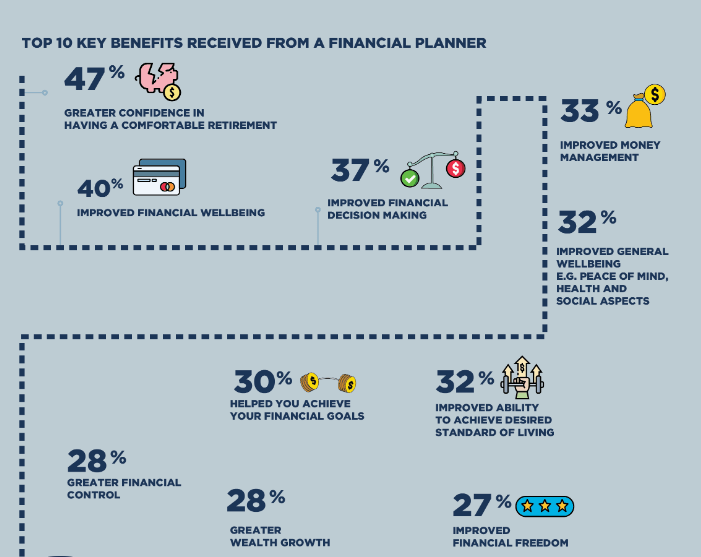
The research showed that Australians who received financial advice are significantly better off across the board compared to those who are not advised. Advised clients reported the following benefits of receiving advice:

  • Greater financial confidence
  • Improved financial decision making
  • Help achieving their financial goals
  • Improved money management
  • Greater peace of mind

We are proud to be Financial Advisers, working in a profession that aims to help our clients live well and enjoy financial freedom.

The infographic below captures the top 10 key benefits of receiving financial advice:

Source: Financial Planning Association of Australia

If you have been thinking about seeing a Financial Adviser, please get in touch with us so that we can show you how you too can benefit from receiving financial advice.

Shares sliding again?

You would be forgiven for asking if you can get off the rollercoaster that is the share market in 2022. Share markets locally and overseas have pulled back again over the past week. There is continued pressure due to inflation, rising interest rates & bond yields and the rising risk of recession. These factors could hurt company profits, hence the volatility we are seeing investment markets.

At times like this, Shane Oliver, Head of Investment Strategy & Chief Economist at AMP, reminds us that there are 7 key messages that investors should keep in mind:

  1. Share market pullbacks are healthy and normal – their volatility is the price we pay for the higher returns they provide over the long term;
  2. It’s very hard to time market moves so the key is to stick to an appropriate long-term investment strategy;
  3. Selling shares after a fall locks in a loss;
  4. Share pullbacks provide opportunities for investors to buy them more cheaply;
  5. Shares invariably bottom with maximum bearishness;
  6. Australian shares still offer an attractive income (or cash) flow relative to bank deposits; and
  7. To avoid getting thrown off a long-term strategy – it’s best to turn down the noise around all the negative news flow.

To read more on Shane’s thoughts: check out the latest addition of Oliver’s Insights

Investing: Asset Classes Animation

There is a lot of research, planning and thought that goes into building an investment portfolio that is right for you. We carefully consider:

Your current position

Your goals

Your investment timeframe

Your risk tolerance

Your investment preferences

This animated video explains the different asset classes that make up a portfolio. If you would like to discuss how we can help you build a customised investment portfolio, please contact us today.

50% minimum pension reduction EXTENDED

On 29 May 2021, the Morrison Government announced that the temporary 50% reduction in the minimum amount superannuation pension members were required to withdraw from their pension account will be extended to 30 June 2022.

As part of their economic response to the Coronavirus pandemic, the Government introduced a temporary 50% reduction in the minimum amount members were required to withdraw from their pension account. This temporary reduction was expected to finish on 30 June this year, but has now been extended to 30 June 2022. If you are currently receiving the reduced minimum, you will continue to do so for the 2021-22 financial year unless you provide alternate instructions.

The reduced pension rates are shown in the table below (these rates will now apply for the 2021-22 financial year):

The Government's economic stimulus packages and your Super. The Changes  Explained | The MBA Partnership

If you wish to review or alter your pension amount, please contact your adviser.

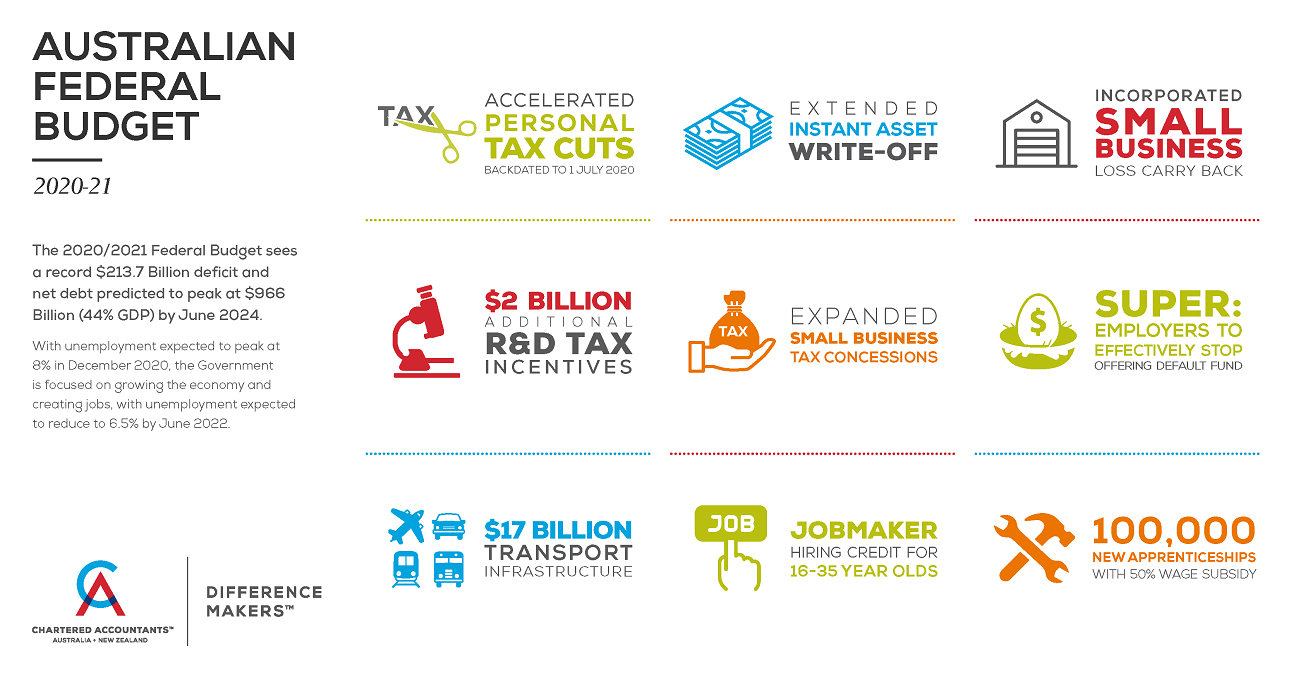
Federal Budget 2020/21

The economic, financial, physical, mental and emotional issues that have arisen due to the COVID-19 pandemic—which immediately followed the devastating bushfires and drought—have undoubtedly been felt by many of us. The Government’s recently delivered 2020-21 Federal Budget aims to focus on rebuilding our economy, creating jobs and securing Australia’s future, with the Government’s ‘COVID-19 Economic Recovery Plan’.

In previous years, the Budget has traditionally been delivered in May, though due to the COVID-19 pandemic, it was delayed and Treasurer Josh Frydenberg delivered the 2020-21 Budget on 6 October 2020.

To read more about the Federal Budget and what it means for you, please access this Federal Budget Report.

Please contact us to discuss any questions you have about the budget and what it means for you.

1 July 2020: Change in the new financial year

1 July 2020: Change in the new financial year

Change has the potential to impact our financial situation, goals and objectives. When this occurs, it’s important to assess the relevance and potential impact—then plan and act accordingly.

A new financial year can mean change—thresholds and rates can increase (or decrease), and legislation can take effect.

Below is a summary of the most notable changes occurring from 1 July 2020 across superannuation, employment, social security and taxation. For a full write up of all changes, please see the original article posted on The Wealth Mentoring Group’s Financial Knowledge Centre on 14 July 2020. Continue reading “1 July 2020: Change in the new financial year”

Financial needs and wants in a post-COVID-19 world

The COVID-19 pandemic has undoubtedly changed the world as we know it. And, while this event is first and foremost a public health issue, other clear and significant issues have also emerged for many of us, be they economic, financial, physical, mental and/or emotional.

While there appears to be some light at the end of the tunnel, and restrictions are gradually being wound back, uncertainty and caution remain—which is an understandable human response.

What we have experienced, and continue to work through, is something truly unique in terms of its overall size, reach and impact. The world grounded to an almost halt, and we were placed in unfamiliar and surreal territory.

What we do know, these changes have affected us on many levels, both temporarily and in some cases permanently. Our strengths and weaknesses, our opportunities and threats, and our values and priorities have been tested. And, with this, some things may revert back to normal, and others may not.

Although there have been many negatives from this event, perhaps one positive has been the opportunity to pause and reflect. By doing so, we have gained insights and learnt lessons about ourselves, which can be used to move forward in a positive direction.

Continue reading “Financial needs and wants in a post-COVID-19 world”

What is a Power of Attorney?

There are different types of Powers of Attorney you can nominate, but the two main ones are a Medical Power of Attorney (also known as a guardianship) and an Enduring Power of Attorney. A Medical Power of Attorney gives another person authority to make decisions about your medical treatment if you’re not physically or mentally able to choose for yourself. An Enduring Power of Attorney (PoA), gives someone the legal authority to manage your financial affairs when you’re unable to do so.

Why would I need a Power of Attorney?

Having a PoA organised is important in case you lose capacity make decisions about your finances through medical reasons, such as age, injury or illness. It can also be worthwhile to organise a PoA if you plan on living or travelling overseas for an extended period of time. Continue reading “What is a Power of Attorney?”